
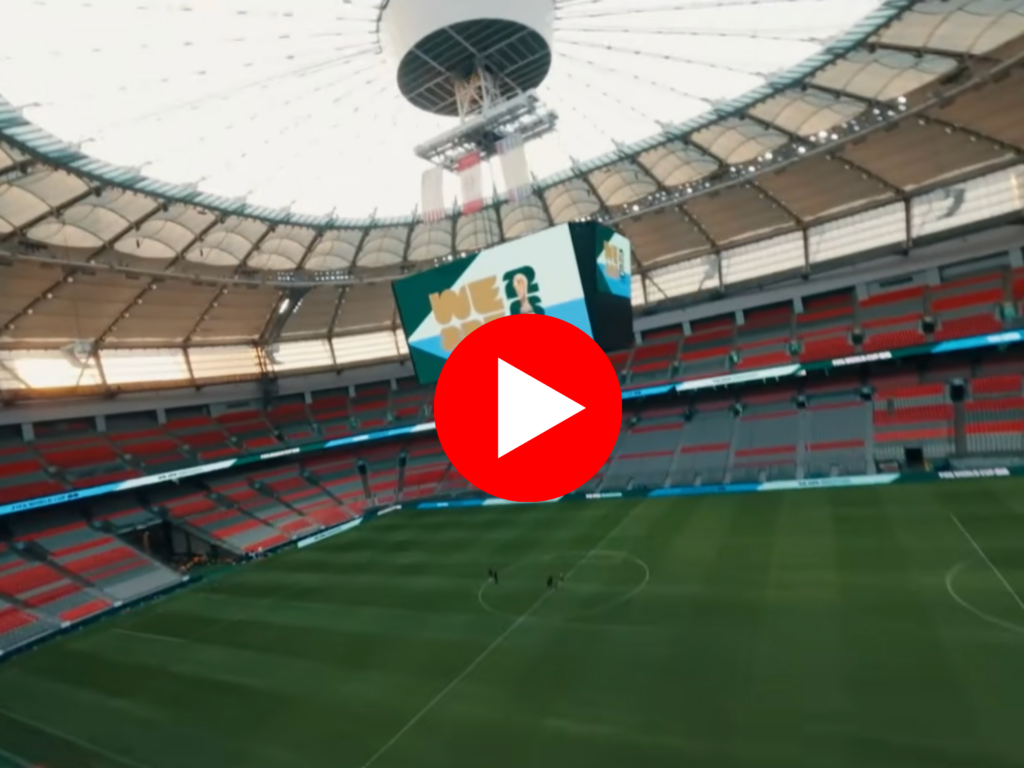
Football or Soccer? Whatever you call it, it’s being talked about right now, even among those who have never touched a ball.

The 2026 World Cup will take place across 16 host cities in the United States, Canada, and Mexico. Yet the tournament’s impact is already reaching far beyond the stadiums. Following FIFA’s announcement of team Base Camps, communities not scheduled to host a single match are preparing for their moment on the world stage.
Some of the most meaningful moments may happen hundreds of miles away—in local restaurants hosting watch parties, youth teams gathering around a television, and families reconnecting through a game they may have never followed before.
I can’t recall ever watching a single match, but I am jumping on the bandwagon, getting into the excitement, and following along with my son. Sharing in this with him gives us a bonding opportunity, a moment to be a part of something together.
The stories we will share from these memories we create are something we can keep forever. Imagine all of the stories to be told from these moments as the momentum keeps growing!
Hotels are filling. Businesses are planning special events. Community leaders are finding ways to welcome visitors and celebrate local culture.
One of the best examples of this can be found in Stories From the Cities, a YouTube series hosted by sports broadcaster Jenny Chiu. As she travels through World Cup host cities, Chiu explores the history, culture, and people who make each community unique. The series reminds viewers that global events are much more than the competition. They’re the communities that bring them to life.
That sense of community pride is nothing new.
Former New York Cosmos goalkeeper Shep Messing reflected on soccer’s earlier rise in America, saying:
“Our Cosmos team lifted the city on their shoulders. That’s what a sport can do. It really captured the imagination of America.”
Today, communities across North America are hoping to capture that same spirit.
For some, the World Cup is an economic opportunity. Small businesses are preparing to welcome new customers, adjust their offerings, and showcase what makes their community special. Local leaders in places like Kansas City have spent years planning for this moment, understanding that the benefits of a global event often begin long before the opening match.
But the impact goes deeper than economics.
For immigrant communities where soccer has always been a way of life, the tournament offers a chance to share traditions, stories, and culture with neighbors experiencing the sport for the first time.
For youth players, it shines a spotlight on local clubs and leagues, inspiring the next generation to dream a little bigger.
For families, it creates a reason to gather around a shared experience, bringing multiple generations together in front of the same screen.
Former U.S. Men’s National Team captain John Harkes, who grew up in Kearny, New Jersey, summed up that sense of pride:
“Kearny has been instrumental in growing the game in this country. I want the rest of the world to see where we are and how far we have grown.”
Long after the final whistle blows, the stories will remain.
A local business may gain a loyal customer.
A young athlete may discover a lifelong passion.
Neighbors who had never met may find themselves cheering side by side.
That’s the part of the World Cup that won’t appear in the standings, but it may be the legacy people remember most.
The tournament will end. The stories won’t.
Take note of the stories happening all around you and the ripple effect of their impact.
We love hearing a great story. What’s yours?