
7 practical shifts that move you from awkward to authentic

Let’s clear something up right away: most people aren’t bad on camera — they’re uncomfortable. And discomfort doesn’t come from a lack of talent. It usually comes from overthinking, unclear messaging, or the pressure to “perform.” So, what happens when that little red light turns on during a video marketing shoot or leadership message? Self-awareness spikes and confidence drops (real fast).
The good news?
Being comfortable on video isn’t something you’re born with; it’s something you build. All you need is the right mindset and a few intentional shifts. Read on to learn how.
#1. Gain Confidence From Clarity
Pressure drops when the purpose becomes clear. Start with one simple question:
What is this video meant to do?
Before you concern yourself with “What should I say?” or “How should I look?” make sure you clearly answer, “What is the ONE thing my audience should walk away knowing, feeling, or doing?”
When your focus shifts from performing to helping, the pressure drops immediately.
Picture talking to just one person, not an audience. Think of a real customer sitting across from you, asking, “Can you help me understand this?”
That shift alone changes everything.
#2. Prepare Talking Points
Have you ever been in a meeting where someone read their entire presentation word for word from their computer? No eye contact, no expression – awkward, right?
It’s the same with video. Instead of attempting to read or memorize a script, create a conversational feel with a simple talking point structure:
- Why this topic matters
- Two or three key points
- One clear takeaway
No memorizing, no pressure to sound perfect. You’re not delivering a TED Talk. You’re having a conversation.
And don’t forget to record a practice take first. When people know “this one doesn’t count,” they loosen up almost instantly.
#3. On-Camera Presence
You don’t need to be an actor to look confident on video. A few small adjustments go a long way.
Focus on these simple things:
- Sit or stand with a relaxed, upright posture (eye-level camera positioning helps with this)
- Look at the camera lens, not the screen
- Smile slightly before you start speaking
- Use natural hand gestures (just like you would in conversation)
- Speak a little slower than you normally would
That’s it. No need for a dramatic delivery. Just you — clear and comfortable.
#4. What to Wear
If you feel uncomfortable in what you’re wearing, it will show. Not because anyone notices the outfit, but because they notice your energy.
We usually recommend:
- Solid colors over busy patterns
- Comfortable, familiar outfits
- Avoiding noisy jewelry or accessories
The goal isn’t to look perfect. It’s to look like yourself.
#5. Simple Tools That Boost Confidence
Here’s something many people don’t realize: good equipment not only improves quality, but it also reduces anxiety.
When you trust your setup, your brain can stop troubleshooting and start communicating.
These simple tools make a big difference:
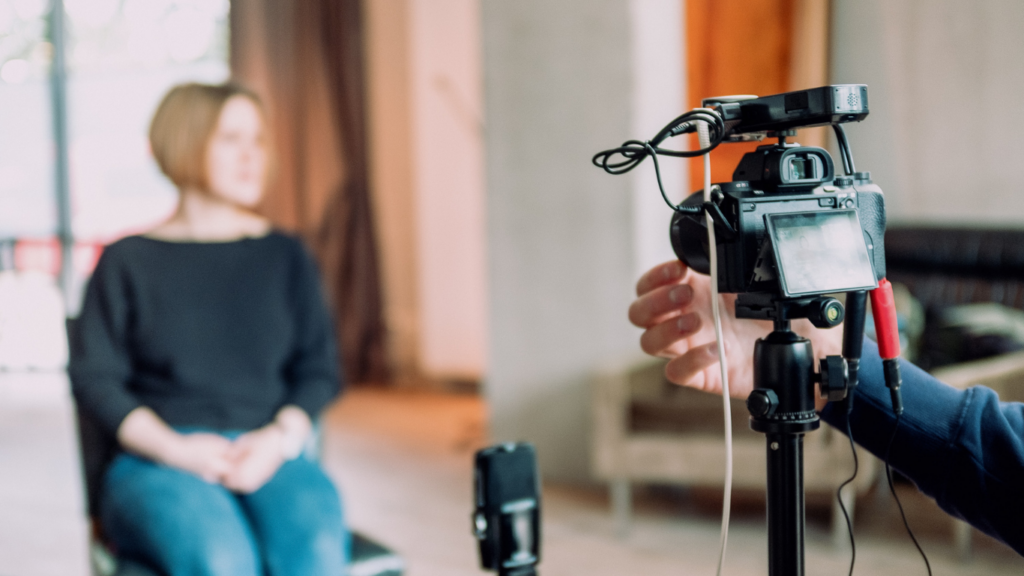
- A tripod – so you’re not awkwardly holding your phone.
- A ring light or soft lighting – for an instant glow
- A lapel microphone – for clear audio
You don’t need a studio budget. Just a few simple upgrades that remove friction.
#6. The Helpful Mindset
After years of helping our clients on camera, we’ve learned one thing matters most: When you stop thinking about performing and think about helping, your focus pivots from you to your audience.
In the end, you’re not there to perform. You’re there to help.
To answer a question.
To share expertise.
To make something clearer than it was five minutes ago.
When you focus on that, the real you comes out. And that’s the version people connect with.
#7. Use Support
If your team is struggling to get comfortable on camera, you don’t have to figure it out alone.
Helping people find their voice is one of our favorite parts of this work. Want to learn more? Let’s Chat.