
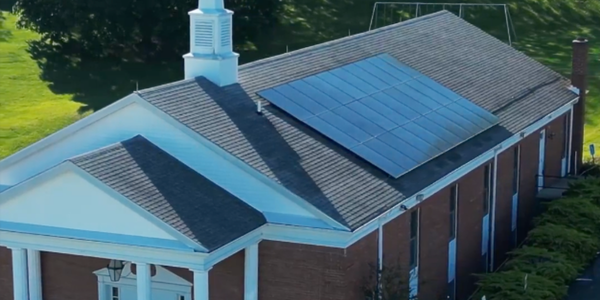
For Pastor Julia Brown, the decision to adopt solar energy wasn’t a far reach. In fact, it perfectly reflects her lifelong commitment to environmental stewardship and caring for the community around her.
“My parents were very formative in my awareness of the importance of faith and the care of God’s creation,” she shared. “I saw them put in extra effort, like sorting their recycling. And our lawn was always splotchy; we didn’t fertilize it because it isn’t good for the water supply.”
Faith in Action
In September 2022, Brown became pastor at Solomon’s United Church of Christ (UCC) in Chambersburg, PA, where she leads the congregation in worship and in efforts to shrink its carbon footprint, including converting the church lawn into a community garden and planting native trees and pollinator gardens.
Then, Solomon’s took on its most significant environmental initiative to date: a switch to solar energy – one that Brown sees as a direct investment in the congregation’s ability to serve its neighbors.
“What it comes down to is if we’re spending less money on operating costs, we will have more money to direct toward all of our missions,” Brown shared. “We see these solar panels and avoiding carbon emissions as a way of loving our neighbors.”
More Savings, More Service
For Brown and her congregation, the real story isn’t about the panels. It’s about what the savings are making possible.
Chief among them is the church’s Power Pack Program, which provides nutritious food to local schoolchildren over the weekend when free or reduced school meals aren’t available. Alongside local partners, the program also provides holiday meals at Easter, Thanksgiving, and Christmas for each student’s family.
The savings support the church’s community vegetable garden, which supplies local food pantries and more contributions to community programs they support, such as:
- Franklin County Homeless Shelter
- Women in Need (a local women’s shelter)
- The Gleaning Project (a South Central PA collaborative nonprofit effort to reduce food loss on local farms and increase food security in the community)
- Little Daisy’s Closet (similar to a thrift store, but providing free clothes)
- Fruit Belt Farmworker Christian Ministry (which provides basic needs to migrant workers in the area).
A Bright Future
Brown said she looks forward to making a positive impact on the environment and hopes the switch to solar energy will eliminate thousands of pounds of carbon dioxide produced each year.
She views the change as something that shows respect and compassion for not only the planet but also its people.
Brown hopes Solomon’s UCC will inspire other churches and businesses to make the switch.
“We’re a small church. If it’s possible for us, it’s possible for larger houses of worship, for businesses,” she said. “We’re hoping we can convince people that if we can do it, they can, too.”