
The ability to tell a story is emotional intelligence on display.
Nail it, and people feel like they’re having a real conversation with a real human being. That’s where the seeds of trust are planted.
Miss the mark – pivot to statistics and ‘proof points’ – and you commoditize yourself to the point where being forgettable is a foregone conclusion.
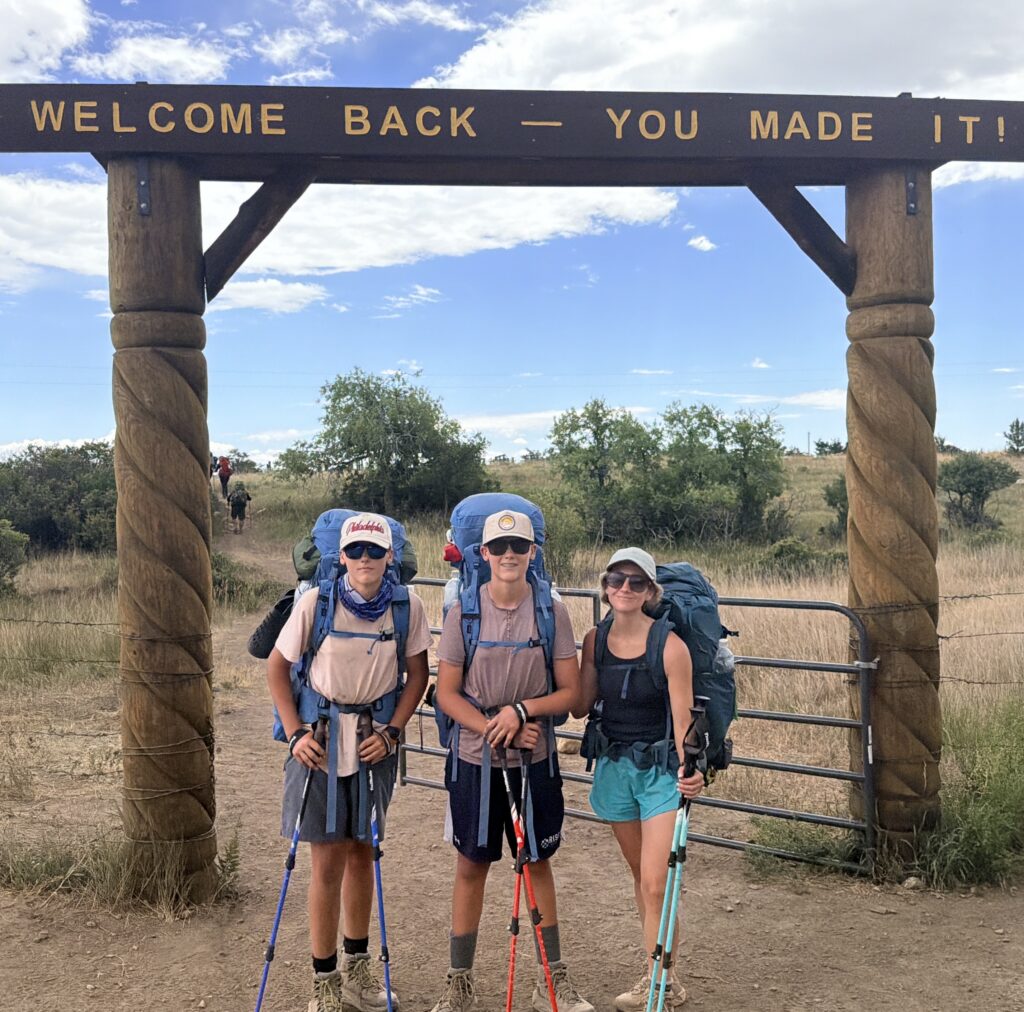
So, in the spirit of using a story to share a message, here’s what an 80-mile trek with my sons and their scout troop taught me about leadership – and the importance of being human when leading others.
A little story about the power of stories
Our troop hiked 80 miles over 7 days through the mountains of New Mexico. It was some of the hardest hiking I’ve ever done, and it came with every emotion you’d expect.
I experienced a ton of pride watching my kids’ faces light up when they reached mountain peaks and successfully hung our food in bear bags (two bear sightings were enough for me!)
I also experienced the quiet ache of watching them struggle – replaced quickly by more pride as they pushed through, got back up, and kept going.
Somewhere around mile 15-ish, as the trail started to get tricky, I realized that my actions on these trails meant more than that of a chaperone. My actions were setting a tone for how we as a crew reacted and responded to challenges.
The scouts would be watching how I handled tough terrain. And near sleepless nights followed by early morning hikes. Whether I pushed through with a good attitude when my legs burned. If I helped the person struggling next to me even as I was struggling myself.
Whether they were conscious of it or not, the scouts were reading my humanity with every step.
That’s what a good story does for your audience. It shows people who you are while you’re in it.
My own account of our time hiking through New Mexico is a very meta example of this principle in action. Not because I told a story from beginning to end – but because I used a small sliver of that experience to demonstrate how I came to better understand the role emotional intelligence plays in practicing leadership.
Hopefully you can pick up by now that I don’t just preach storytelling from atop a soapbox. I use my own lived experience to help communicate with others – and do my best to pass those experiences along in the hope they help other leaders as well.
This is exactly why storytelling is one of the most underused tools leaders have. It’s a direct expression of emotional intelligence. Rather than telling someone your message, your story lets you demonstrate it – a much more powerful and memorable way of delivering a point.
Storytelling is emotional intelligence, made visible.
A directive tells people what to do. A statistic tells people what happened.
A story – a real one, with struggle and doubt and a specific mile marker where things got hard – tells people I understand what this feels like, and I see what you’re carrying.
In other words, you’re putting your empathy into action.
Teams follow leaders who’ve shown them what it looks like to keep climbing without having all the answers yet. Vulnerability, told well, is information. It tells your team this person understands pressure, and I can bring mine to them.
Customers and clients trust the people and stories behind a brand.
The same is true outside your organization.
A case study proves competence. But a story about the moment things almost didn’t work proves you’re worth trusting with what matters most to them.
That’s true whether you’re leading a team through a hard quarter, asking a client to bet on you, or leading a crew of scouts on an 80-mile adventure.
That’s what your story can do for the people you lead and the people you’re asking to trust you. Don’t waste it.
If you’re ready to talk about your own leadership story and how to use it to empower your brand storytelling strategy, we’re here. Let’s chat!